
Thomas ‘Blind’ Kiernan
(c1807-1887) [year of birth based on age at time of death]
Fiddle

Parish: Drumlish
Townland: Cartrongolan
Place of birth: Cartrongolan, Drumlish Parish, County Longford (or possibly born in Cranley, Mostrim Parish, Co Longford)
Later place lived: as above
Listing in the census: N/A - died before the first 1901 Census
The following is a summary of Thomas Kiernan’s music career. Further reading on Kiernan’s family background and music career can be found in Conor Ward’s thesis.
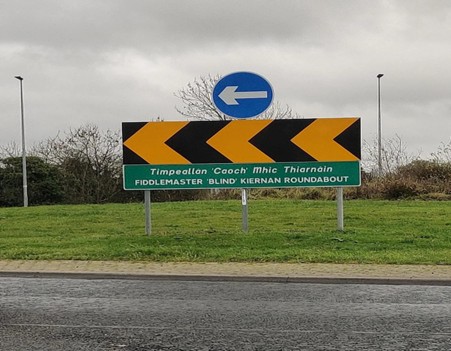
Thomas ‘Blind’ Kiernan (c.1807–87) was a fiddle master from Drumlish, County Longford. Born around 1807, he contracted smallpox as a child, leaving him partially blind. As it was common at the time for children with disabilities to be given training in a trade or skill that could provide them with a stable career, Kiernan was sent to learn the fiddle, likely from a “gentleman” fiddle player associated with one of the big houses. A comparison of Kiernan’s repertoire and teaching techniques with historical music sources from the north of Ireland suggests that his teacher may have been located in that region.
Kiernan was both a performer and a fiddle teacher during his prolific music career. As a performer, he played in a variety of settings throughout the Conmhaicne region, including taverns, big houses and cross-road dances.
Two identified taverns he played in are the “Red Cow” tavern outside Longford Town and “Leonard’s” tavern in Abbeyshrule. He would usually stay for about a month in a tavern, performing for the patrons and, to supplement his income, teaching the fiddle to the tavern owner’s children as well as to children from the surrounding area.

appears to be a mistake by O’Neill and actually refers to Peter Kennedy of Ballinamore
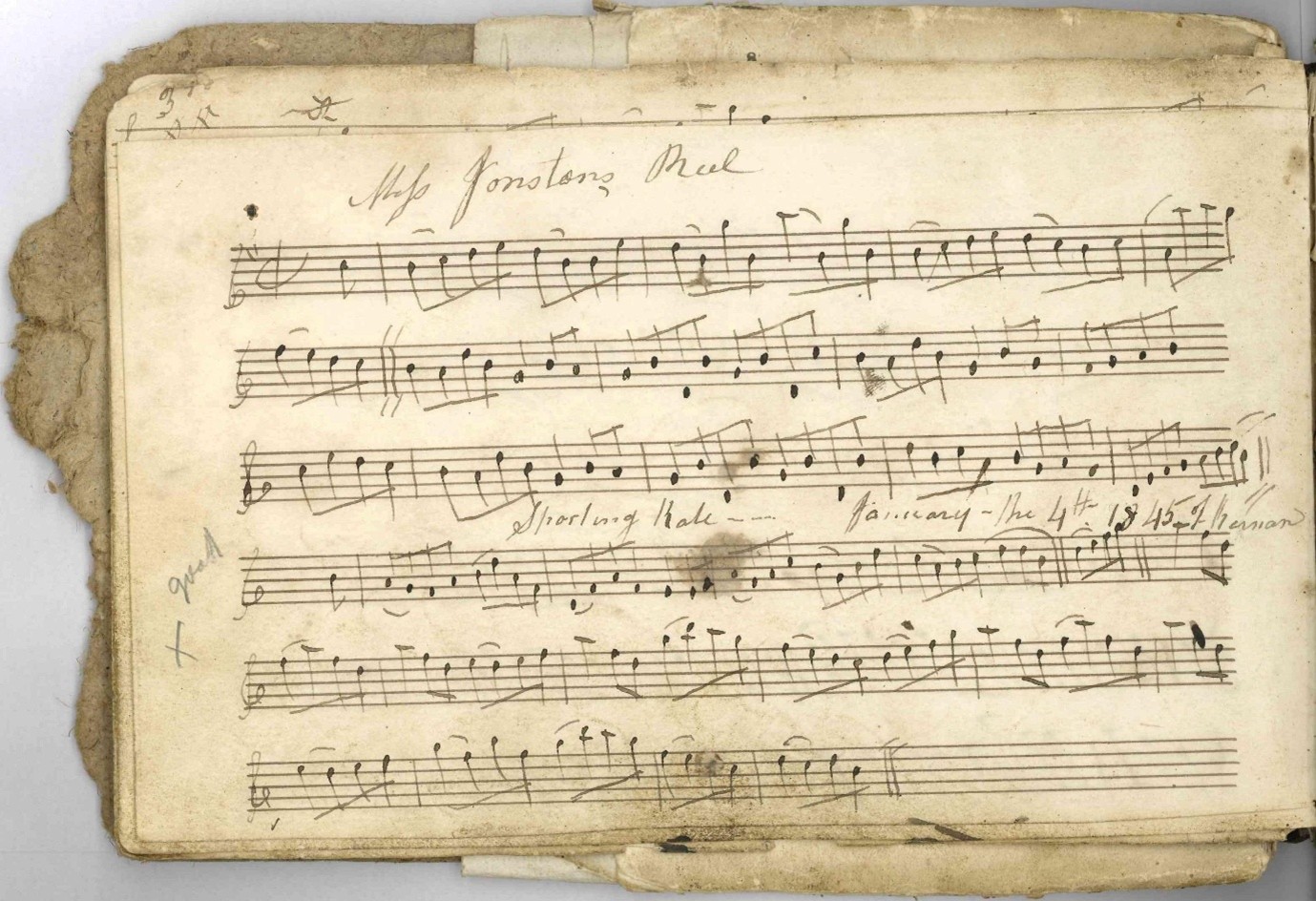
An example of this tavern performance and teaching setting occurred at Leonard’s Tavern in Abbeyshrule in the mid-1840s. While Kiernan was performing there, he taught the fiddle to Michael Leonard (c.1835–86), a son of the tavern owner. Through a fortunate set of circumstances, the music manuscript Kiernan used to teach Leonard between October 1844 and January 1846 has survived to the present day.
Containing a hundred tunes transcribed during these lessons by Kiernan and Leonard, the manuscript’s repertoire provides a valuable window into the music Kiernan was performing and teaching during the 1840s. While it contains older native Irish music, including Turlough Carolan’s planxties, Irish reels, jigs and song airs, the repertoire is dominated by contemporary international music. This includes European ballroom music in the form of waltzes and quadrilles, operatic arias, international song airs, British hornpipes, European military marches, and reels adapted from Scottish strathspeys.
The manuscript’s repertoire provides an insight into the changing nature of Irish traditional music during the 19th century. What is now termed “modern Irish traditional music” was undergoing a significant transformation during this period, as musicians incorporated new forms of music from America, Britain and continental Europe alongside the existing native Irish repertoire. The substantial presence of contemporary international music in the Leonard-Kiernan manuscript reflects this early stage in the evolution of the tradition.
In addition to performing in taverns, Kiernan also played for ballroom dances held in the big houses throughout the Conmhaicne region. For example, together with his nephew Bernard ‘Fiddler’ Carolan (c.1838–1927), he performed at dances held by Lord Granard in the 1870s for his affluent friends at his residence in Castle Forbes, Newtownforbes. The ballroom repertoire of waltzes and quadrilles contained in the Leonard–Kiernan MS was likely among the music played at these dances. This is suggested by an entry in this manuscript accompanying the set of “Lancers Quadrilles”, where Kiernan writes, “Lancers commenced by T. McKernan”. To this writer, this notation suggests that the phrase was not simply a note identifying the tune, but may have recorded the manner in which the dance was announced or commenced for the assembled dancers.
While Kiernan was a renowned performer, arguably his greatest legacy was his fiddle teaching. Through a teaching career spanning approximately fifty years, from c.1830 to c.1880, he was responsible for bringing fiddle music into native working-class communities across the Conmhaicne region.
Through Kiernan’s teaching, several of his students went on to become teachers themselves, creating localised clusters of fiddle music in the north Longford, south Longford and south Leitrim regions of Conmhaicne. These include:
- South Leitrim: Peter Kennedy (c.1822–1902), Lisnatulla, Ballinamore Parish, Co. Leitrim.
- North Longford: Bernard Rogers (1856–1907), Oghill, Killoe Parish, Co. Longford; and Francis McDonagh (c.1845–1935), Kilshrewly, Clonbroney Parish, Co. Longford.
- South Longford: James Hanly (c.1815–1901), Coroole, Newtowncashel, Cashel Parish, Co. Longford.
Fortunately, several manuscripts and recordings originating from Kiernan and generations of his students have survived to the present day. These historical music sources provide a greater understanding of the techniques used by Kiernan and later teachers to teach the fiddle, particularly Kiernan’s use of the bowing technique known locally as “slur and cut”, and his use of “preludes” to teach intonation.

Of course, there were many other fiddle musicians and fiddle teachers in Conmhaicne who had no links to Kiernan’s teaching. Nevertheless, Kiernan and the generations of teachers who followed him made a significant contribution to the development of a vibrant fiddle tradition in the Conmhaicne region, a tradition that has survived to the present day.
Teacher:
unknown, possibly a “gentleman” fiddle player of the gentry class. If this theory is correct, some possible geographical locations for his teacher are:
(a) Ulster: due to the similarity of repertoires and prelude exercises in Kiernan’s music and that of the Luke Donnellan Collection (c1900) of the Oriel region of Louth and Armagh and also the similarity of repertoires with the Gunn Book (c1860s) of Co Fermanagh
(b) Dublin: according to an informant, a contemporary of Kiernan’s, the fiddle player James ‘Blind’ Reynolds (c1819-1912) of Fenagh, Co Leitrim, was “taught in a home in Dublin”, and so possibly Kiernan learned here too.
Student(s): taught professionally for approximately 50 years between c1835-c1885 and he is likely to have taught hundreds of students.
Verified Students:
- Peter Brady (1859-1939), Gaigue, Drumlish Parish, County Longford and later Aughafin, Mostrim Parish, County Longford (these three Bradys are first cousins with one another)
- Patrick Brady (1861-1952), Gaigue, Drumlish Parish, County Longford and later Newtownforbes Village, Clonguish Parish, County Longford
- Philip 'Red Phil' Brady (1864-1946), Gaigue, Drumlish Parish, Co Longford
- His nephew, Bernard Carolan (c.1838-1927), Drumlish Village, Drumlish Parish, County Longford and later none
- John Carty (c1840s-?), Aughagreagh, Colmcille Parish, Co Longford and his brother
- James Hanly (c1815-1901), Coroole, Newtowncashel, Cashel Parish, Co Longford
- Peter Kennedy (c1822-1902), Lisnatulla, Ballinamore Parish, Co Leitrim (see Reilly MSS, c1900s)
- Michael Leonard (c1835-1886), Drumanure, Abbeyshrule, Carrickedmond and Abbeyshrule Parish, Co Longford (see Leonard-Kiernan MS, c1840s)
- Francis McDonagh (c1845-1935), Kilshrewly, Clonbroney Parish, Co. Longford and later Clonard, Carrickedmond Parish, Co Longford
- Patrick O'Farrell (1836-fl.1870s), Aughadowry, Drumlish Parish, County Longford and later unknown (see Patrick O’Farrell MS, c1885)
- Francis Reynolds (1862-1946), Gaigue, Drumlish Parish, County Longford (see Francis Reynolds MSS, c1885)
- His nephew, Bernard Rogers (1856-1907), Oghill, Killoe Parish, Co Longford (see (a) Larry Smyth MS, c1900) and (b) Rogers-McBrien MS, c1900)
- Terence Smith (dates unknown), mentioned by O’Neill (1913, p.369) as a pupil
Fiddle players in south Leitrim and County Longford possibly taught by Kiernan:
- 'Blind' Blake (c1800s), Kiltyfinnan (Keltyfannon), Fenagh Parish, Co Leitrim (forename unknown)
- Edward 'Ned' Corrigan (c1835-1912), Cloonelly, Dromard Parish, Co Longford and later Rossan, Aughavas Parish, Co Leitrim
- John Dolan (1865-1950), Aughadowry, Drumlish Parish, County Longford and later none (father of fiddler Packie Dolan (1904-32)
- John Masterson (c1840-1912), Firmullagh, Moyne, Killoe Parish, Co Longford and later Drumury, Dromard Parish, Co Longford (see Reilly MSS, c1900s)
- Bryan 'Blind' Sweeney (c1800s), Esker, Mohill Parish or Cloone Parish, Co Leitrim (There are Esker townlands in Mohill and Cloone Parishes)
Related musicians:
- Nephew, Bernard Carolan (c.1838-1927), Drumlish Village, Drumlish Parish, County Longford and later none
- Grand-nephew, John Kiernan (1891-?), Cartrongolan, Drumlish Parish, Co Longford
- Nephew, Bernard Rogers (1856-1907), Oghill, Killoe Parish, Co Longford
- Brother-in-law's nephew, Pat Rogers (1872-?), Cartrongolan, Drumlish Parish, Co Longford
Occupation(s): Professional musician
Family:
Spouse: None
Children: None
Parents: Michael Kiernan and Mary Tierney (unverified)
Siblings: Fr. Michael (c1814-1862), Patrick (c1803-1877), James (c1799-1874), Mary Anne Rogers (c1827-1911), Anne Carolan (c1800-1891) and Brigid Carolan (c1805-77). [year of birth based on age at time of death]
Manuscripts:
Transcribed by Kiernan
Leonard-Kiernan Manuscript, c1844-46, Drumanure, Abbeyshrule, Carrickedmond Parish, Co Longford. Transcribed by Kiernan and his student Michael Leonard (c1835-86) during fiddle lessons between 1844 to 1846
Kiernan’s music transcribed by his students
- Patrick O’Farrell MS, c1870, Aughadowry, Ballinamuck, Drumlish Parish, Co Longford. Transcribed by Kiernan’s student Patrick O’Farrell (1836-?)
- Francis Reynolds MSS, c1885, Gaigue, Ballinamuck, Drumlish Parish, Co Longford. Transcribed by Kiernan’s student Francis Reynolds (1862-1946)
- Larry Smyth MS, c1900, Killasona, Granard Parish, Co Longford. Transcribed by Larry Smyth (1866-1930). Larry was taught by Bernard Rogers (1856-1907), who in turn was taught by his uncle Thomas Kiernan. Larry has written “Kiernan’s music” throughout the manuscript